Butter Croissants From Scratch
Highlighted under: Homemade Dessert Favorites
I love making butter croissants from scratch because there's nothing quite like the aroma of fresh-baked pastry wafting through the kitchen. The golden, flaky layers and rich buttery flavor make every bite worthwhile, especially when paired with a cup of coffee. While the process may seem daunting, once you get the hang of it, it becomes a labor of love that's deeply rewarding. Plus, nothing beats the satisfaction of enjoying croissants that you’ve made all by yourself!
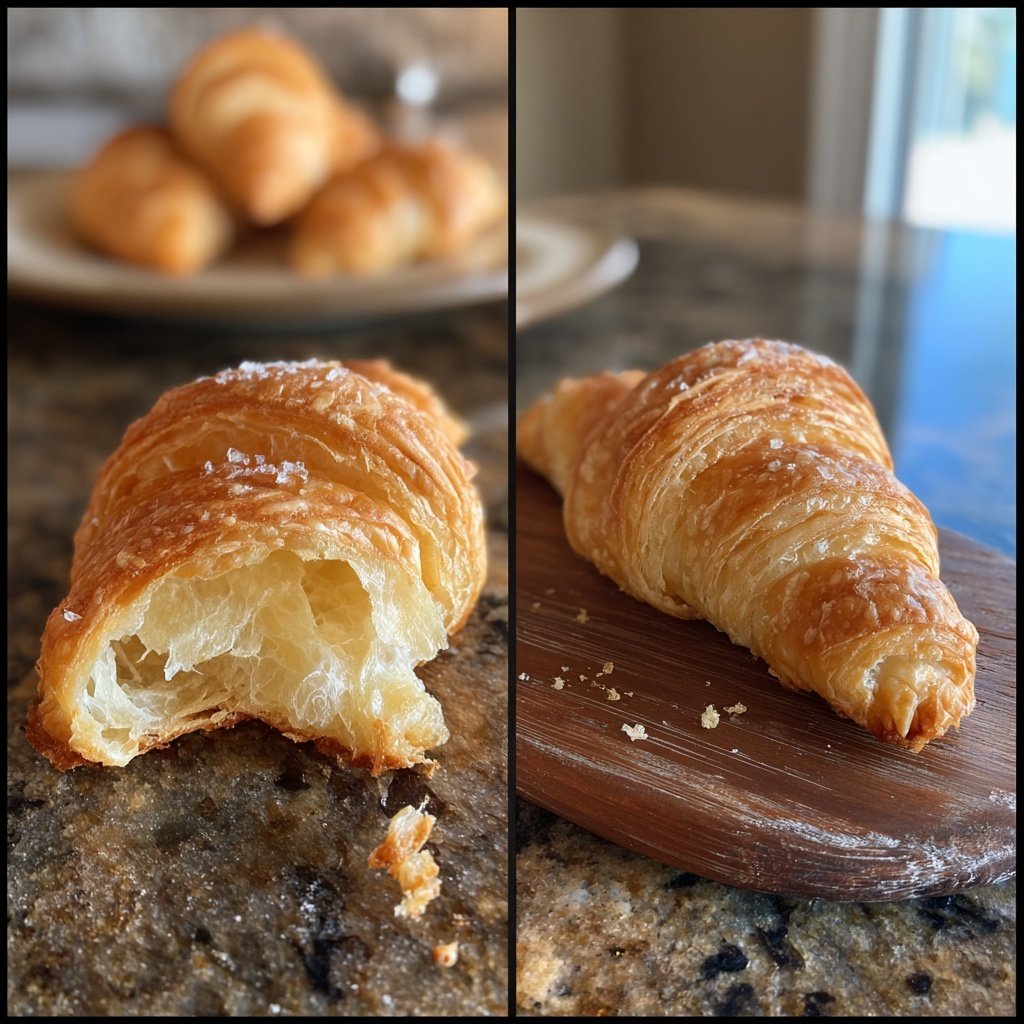
When I first attempted making croissants, I was intimidated by the idea of laminating dough. However, I soon discovered that with patience and practice, it became a delightful ritual. Each fold and turn of the dough adds to the layers, creating that characteristic flakiness. I also learned that allowing the dough to rest in the fridge is crucial for the best texture and flavor.
One tip I always share with friends is to work in a cool environment. If the butter warms too much during the process, the croissants won't rise properly. Using cold ingredients and a quick touch prevents the butter from melting, ensuring the flaky layers stay intact. Enjoying these warm, fresh croissants straight from the oven is an experience like no other!
Why You'll Love This Recipe
- Rich buttery flavor in every flaky bite
- Satisfying hands-on experience for baking enthusiasts
- Fresh croissants straight from your oven
Understanding the Dough
The foundation of any great croissant is the dough, and understanding each ingredient's role is crucial. The all-purpose flour provides structure, while the sugar not only sweetens but also aids in browning. Instant yeast is preferred for its reliability and quicker rise, allowing for a more predictable fermentation process. Don’t rush the kneading; aim for a smooth texture, which indicates proper gluten development. This step enhances the croissant's structure, leading to those coveted layers.
Temperature plays a vital role in making croissants. Cold water is crucial for keeping the dough cool during the mixing process, especially since the dough will be worked on and rolled out. If the environment is too warm, your butter could melt, resulting in a greasy texture rather than the flaky layers you desire. Refrigerating the dough for two hours is non-negotiable, allowing it to relax and firm up before lamination.
Mastering the Lamination Technique
Laminating the dough is the artistry of creating croissants. When rolling out the butter, ensure it is pliable but still cold; you want it to spread easily without breaking the dough. If it starts to soften, pop it back in the fridge for a few minutes. The aim is to encase the butter fully and perform the folds without tearing, allowing the layers to develop during baking. Each fold you make introduces air pockets that will puff up beautifully in the oven.
The number of folds influences the flakiness of the croissants. Aim for at least three complete turns of rolling and folding, letting the dough chill each time to maintain the integrity of the butter. Be mindful of the thickness as you roll—aim for about 1 cm thick. This balance will allow the layers to expand properly in the heat, resulting in a light, airy texture when done.
Perfecting Croissant Shape and Baking
Shaping the croissants may take some practice, but the methodology is simple. When cutting triangles, ensure the base is wide enough to roll neatly. A wider base leads to a beautifully rounded croissant; if you cut them too narrow, they may come out flat. Once rolled, allow them ample time to rise; this second rise is crucial for achieving the final airy texture. If you're unsure, look for the dough to nearly double in size, and be patient—this can take up to two hours depending on the temperature.
When it's time to bake, preheat the oven adequately to 200°C (400°F); a hot oven is essential for proper puffing. The egg wash not only adds color but also contributes to a glossy top. Watch them closely in the last few minutes; the croissants should turn a rich golden brown, indicating they are perfectly baked. If they brown too quickly, consider lowering the temperature slightly; this will allow a more even bake without burning the exterior.
Ingredients
For the Dough
- 500g all-purpose flour
- 10g salt
- 60g sugar
- 10g instant yeast
- 300ml cold water
- 250g unsalted butter (for laminating)
For Egg Wash
- 1 large egg
- 1 tablespoon milk
Make sure all ingredients are at the right temperature for the best results.
Instructions
Prepare the Dough
In a mixing bowl, combine the flour, salt, sugar, and yeast. Gradually add the cold water and mix until a dough forms. Knead the dough for about 10 minutes until it's smooth. Wrap in plastic and refrigerate for 2 hours.
Laminate the Dough
Roll out the butter between two sheets of parchment into a rectangle, about 1 cm thick. Roll the dough into a rectangle and place the butter in the center. Fold the dough over the butter and seal the edges. Roll out the dough again, folding it into thirds. Repeat this process three times, chilling in between each fold.
Shape the Croissants
Roll out the dough one final time and cut it into long triangles. Starting from the base, roll each triangle tightly to form the croissant shape. Place on a lined baking tray and let rise for 2 hours.
Bake
Preheat your oven to 200°C (400°F). Whisk the egg and milk together for the egg wash and brush it over the croissants. Bake for 15-20 minutes or until golden brown. Let cool slightly before serving.
Enjoy your freshly baked croissants with your favorite jam!
Pro Tips
- For the best results, ensure your butter stays cold during the laminating process. Use a marble surface if possible to keep the temperature down.
Storage and Make-Ahead Options
These croissants can be made ahead of time and frozen for convenience. After shaping, place them in the freezer on a baking tray until solid, then transfer to an airtight container. They can be stored in the freezer for up to three months. When you're ready to enjoy them, allow them to rise on the counter for about 1-2 hours before baking straight from the freezer. This ensures they will puff beautifully in the oven.
If you have leftover croissants, you can store them at room temperature in a paper bag for up to two days. To refresh them, lightly sprinkle with water and reheat in a preheated oven at 180°C (350°F) for about 5-7 minutes. This revitalizes their flaky texture and warm buttery flavor without drying them out.
Troubleshooting Common Issues
If your croissants don’t rise as expected, several factors might have contributed. Ensure your yeast is fresh and active; consider proofing it in warm water with a bit of sugar before starting if you're unsure. Additionally, monitor the dough temperature—working in a cooler environment can help maintain the butter’s integrity during lamination. If they break apart while rolling, your dough might be too warm; chill it briefly before proceeding.
For those who find their croissants too dense, it may have been related to insufficient kneading or folding. Ensure the dough is well-developed by the time you laminate it. Also, pay attention to the rising times; under-proofed dough will not achieve the desired layers or airy texture. Remember, patience is key in the croissant-making process!
Questions About Recipes
→ Can I freeze the croissants?
Yes, you can freeze unbaked croissants. Just shape them and freeze before the final rise.
→ How can I tell when the croissants are done baking?
They should be a rich golden brown color and sound hollow when tapped on the bottom.
→ What can I do if my dough is too sticky?
You might need to add a bit more flour while kneading but be careful not to add too much.
→ Can I use whole wheat flour instead?
You can substitute part of the all-purpose flour with whole wheat, but it may affect the texture.

Butter Croissants From Scratch
Created by: Morgan Reeves
Recipe Type: Homemade Dessert Favorites
Skill Level: Intermediate
Final Quantity: 12 croissants
What You'll Need
For the Dough
- 500g all-purpose flour
- 10g salt
- 60g sugar
- 10g instant yeast
- 300ml cold water
- 250g unsalted butter (for laminating)
For Egg Wash
- 1 large egg
- 1 tablespoon milk
How-To Steps
In a mixing bowl, combine the flour, salt, sugar, and yeast. Gradually add the cold water and mix until a dough forms. Knead the dough for about 10 minutes until it's smooth. Wrap in plastic and refrigerate for 2 hours.
Roll out the butter between two sheets of parchment into a rectangle, about 1 cm thick. Roll the dough into a rectangle and place the butter in the center. Fold the dough over the butter and seal the edges. Roll out the dough again, folding it into thirds. Repeat this process three times, chilling in between each fold.
Roll out the dough one final time and cut it into long triangles. Starting from the base, roll each triangle tightly to form the croissant shape. Place on a lined baking tray and let rise for 2 hours.
Preheat your oven to 200°C (400°F). Whisk the egg and milk together for the egg wash and brush it over the croissants. Bake for 15-20 minutes or until golden brown. Let cool slightly before serving.
Extra Tips
- For the best results, ensure your butter stays cold during the laminating process. Use a marble surface if possible to keep the temperature down.
Nutritional Breakdown (Per Serving)
- Calories: 300 kcal
- Total Fat: 20g
- Saturated Fat: 12g
- Cholesterol: 90mg
- Sodium: 150mg
- Total Carbohydrates: 30g
- Dietary Fiber: 1g
- Sugars: 3g
- Protein: 5g